
10+ yrs in startups
0 → 1
End-to-end
All hands, all hats

Digital experiences,
designed.

UX, UI, product, experience, interaction, digital — the title on the brief changes, what I design doesn't: Products that work for the people using them, and the businesses building them.

Get in touchSee projects

Design tenets

The window to earn the habit is short.

Users decide fast. You only get one first experience for them to "get it", and if they don't, they rarely come back to find it.

Discovery before design

Magnifying glass flat icon in black inside purple round cornered box

Without understanding what's broken and why, design is just the aesthetic layer — UI without the UX. Something that looks polished but isn't solving anything real. User research, behavioural insights, pattern-finding — that's where it starts.

Invisible or excitable

Launching rocket ship flat icon in black inside purple round cornered box

Good design either disappears completely or stops you in your tracks. Neither happens by accident. It takes thinking through every state, every edge case, every transition. The craft is in what was considered, not what's visible.

Earn the return

Bar graph growing upwards flat icon in black inside purple round cornered box

Launch thoughtfully, iterate with insights. Track what users do, where they drop off, what they skip — and use it to identify changes that make the product a better version of itself. Not just adding to the backlog, but building the right thing next.
Experience + Approach

Wide lens, sharp focus

Ten-plus years of end-to-end ownership inside one startup, from early-stage scrappiness to scale. I've seen what breaks when a business grows fast, what it takes to work lean, and how having every corner of the business invested in design decisions shapes the way you think about solving them.

That embeds an intuition for holding the wide view and the fine detail at the same time — and a way of working closely with founders, PMs, and engineers to make sure what ships is considered and buildable.

Small Avatar of Kate Bishop

Projects

Pilot insights behind the Refillers now installed at Google, Meta, Atlassian, and Netflix.

Navy blue Refilled bottle with brand icon on turquoise app icon

Project overview

Early-stage startup • Lean founding team • Post-beta validation

Refilled had a working beta machine and early traction — people were refilling without any prompting. The brief was to build a companion mobile app to deepen engagement: track impact, earn rewards, manage payments — testing how digital touchpoints could drive engagement and shape the refill experience.

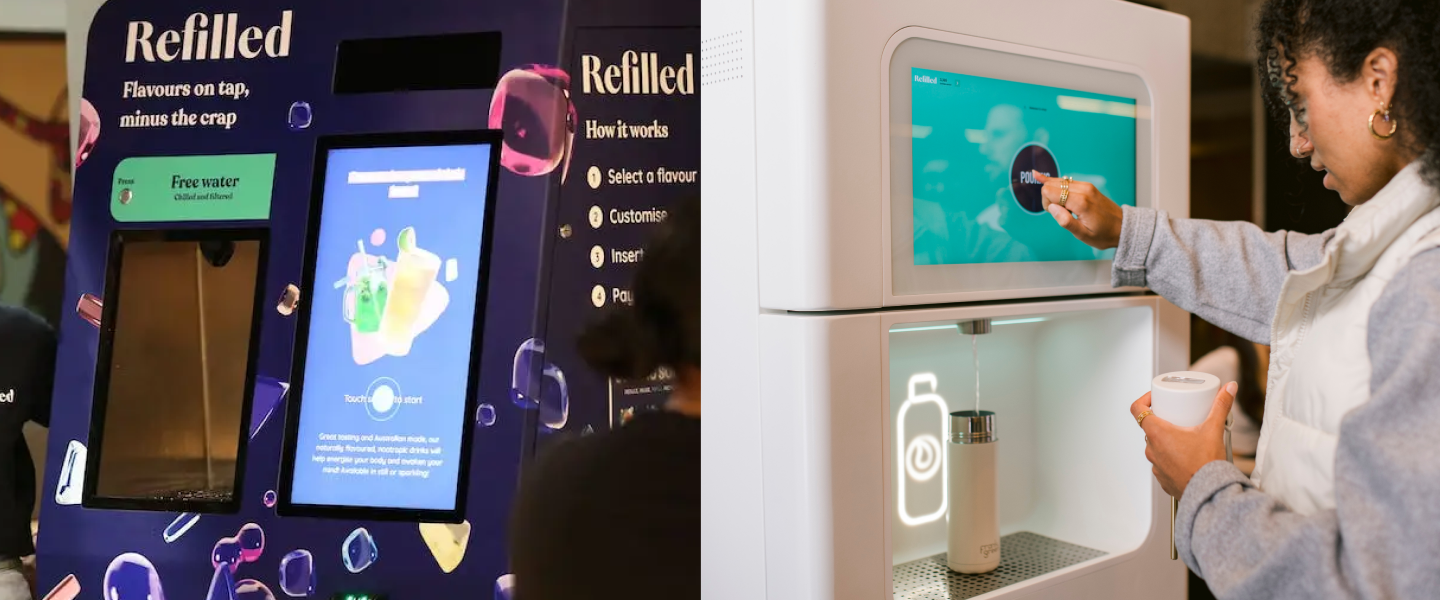
Side-by-side of beta purple loud Refiller machine next to sleek, minimal new Refiller machine with young woman pouring
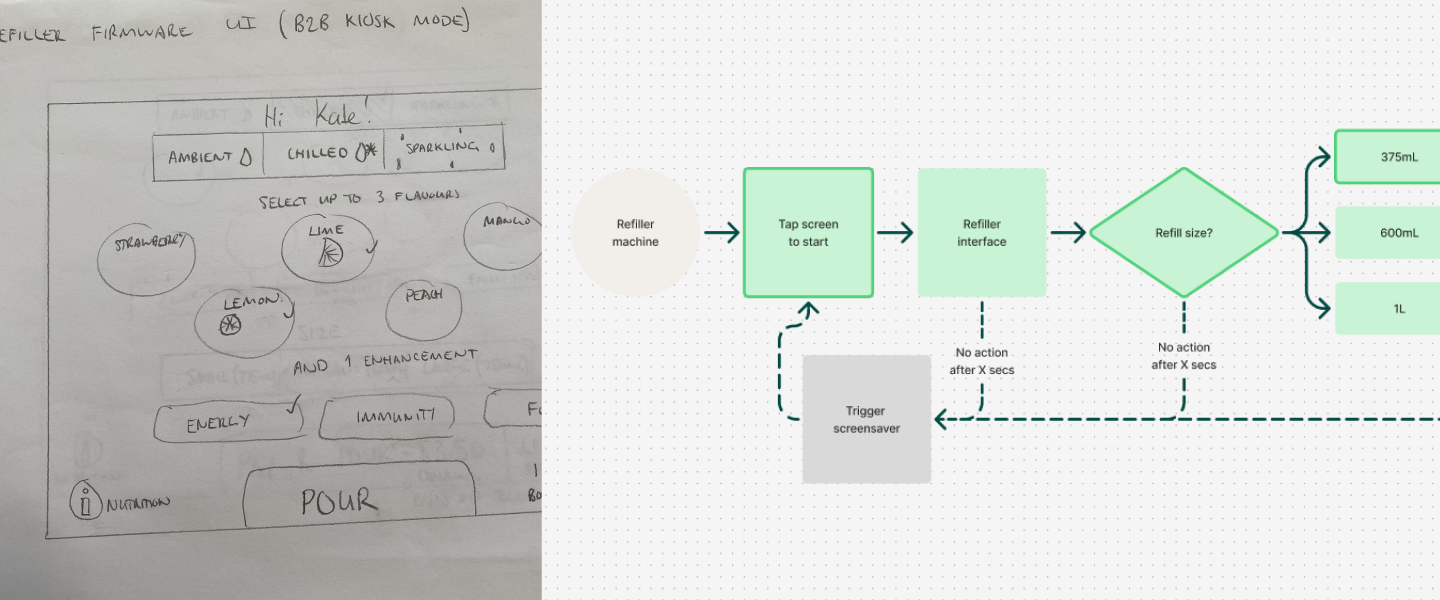
Hand drawn Refiller interface UI sketches next to UX flow for on-screen interface
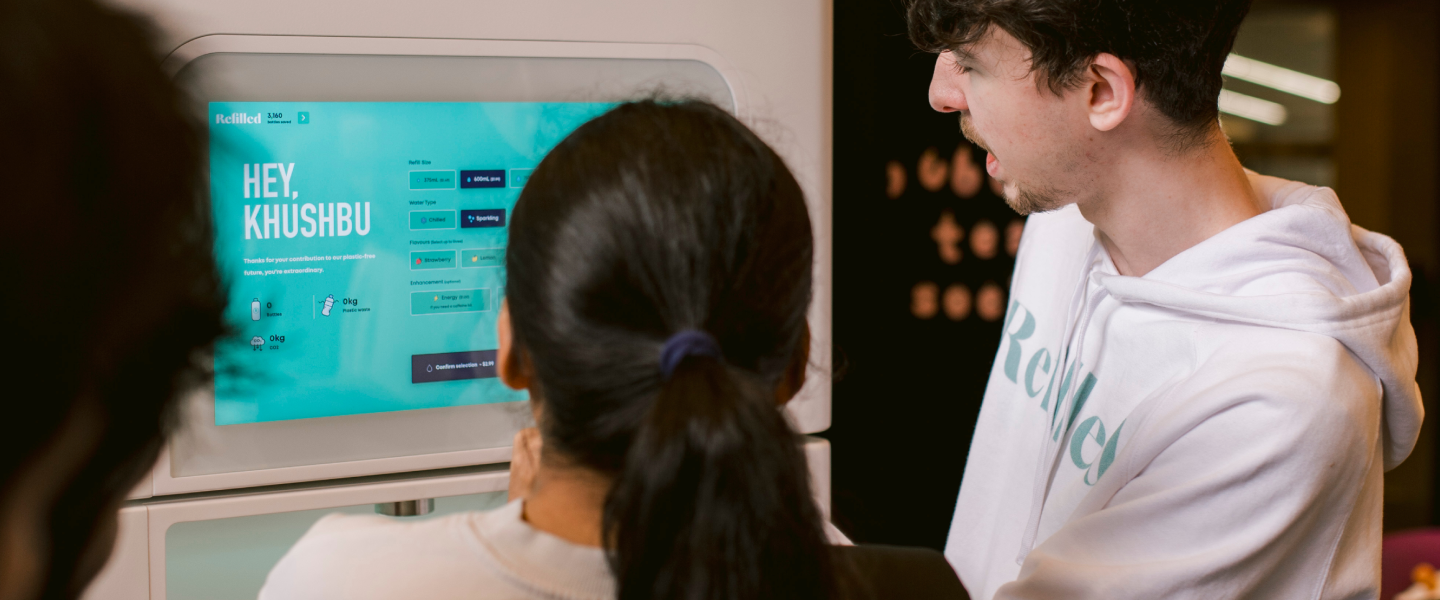
New Refiller machine being trialled with Refilled employee and university students
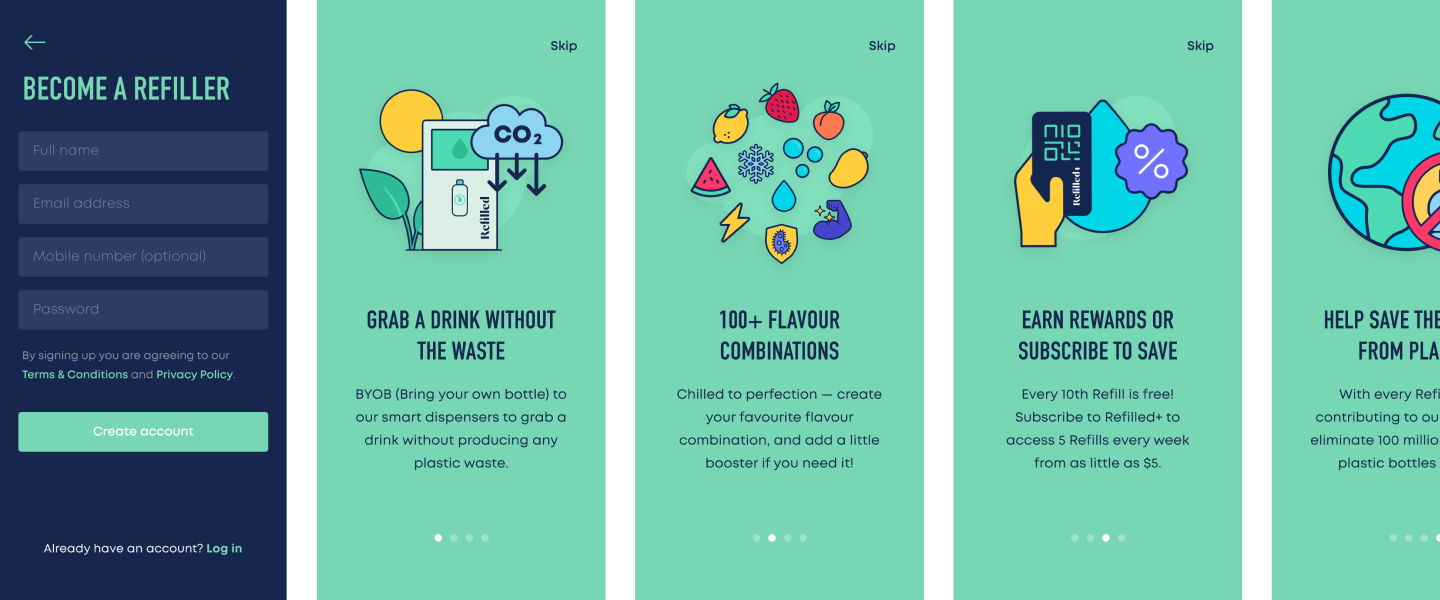
Welcome and onboarding UI pages for the Refiller mobile app

Key assumptions

01

A mobile app would keep users engaged with the product.

02

Refills would be paid by the person refilling.

03

Gamification and impact stats should belong in the app.

Key outcomes

MVP app learnings led to reframed product direction before scale.

One screen, four-step refill flow completed in under 20 secs.

Adopted by Google, Meta, Atlassian, Netflix, and more.

Design process

Usage data showed users refilling without the app. Discovery revealed B2B buyer split — the payer and the user were rarely the same person.

Shifted focus from app engagement to the machine itself. The opportunity was in distilling the point of action, not on another screen.

Simplified refill flow. Designed for free and paid models without comprimising either. On-machine impact replaced app-based gamification.

A rebrand became the opportunity to unify the Refiller UI, app, and brand touchpoints into a coherent system ready for commercial rollout.
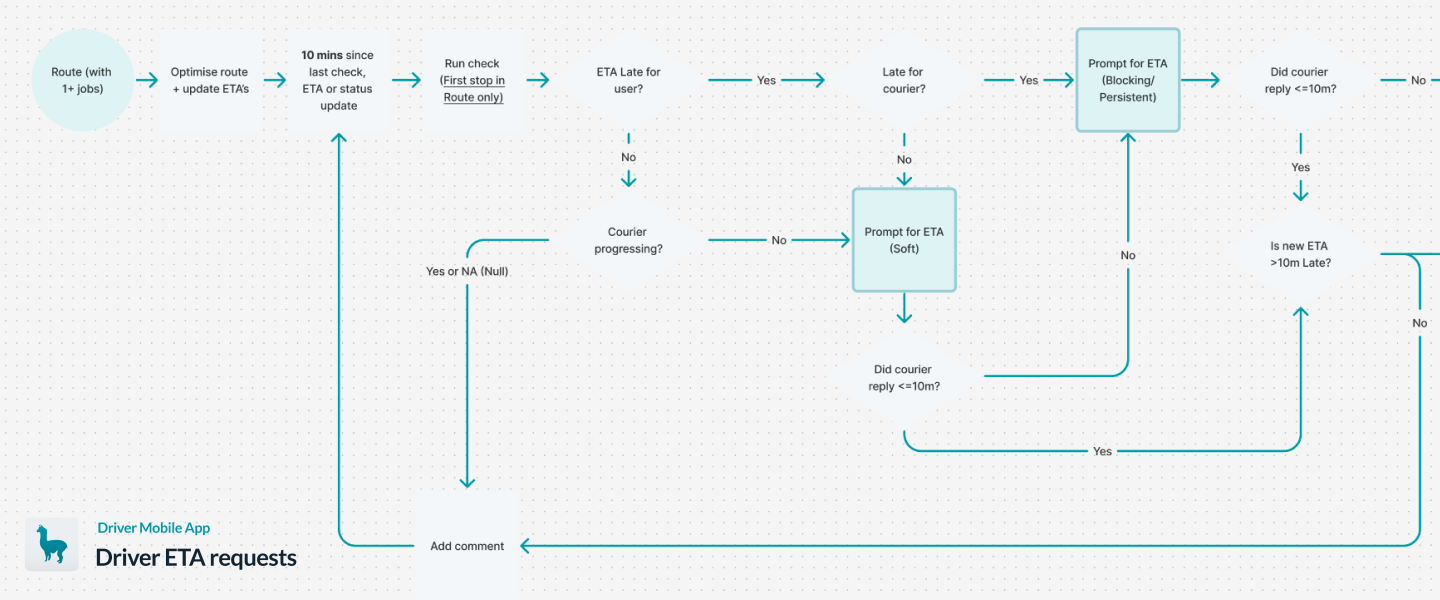
Fewer interruptions, better visibility — and a 70% reduction in manual ETA-related SMS volume

Sherpa Blue llama icon on grey app tile

Project overview

Scaling • Mature product team • Operational automation

Sherpa's tracking agents spent hours each day chasing drivers for ETAs on late deliveries — via SMS and phone calls that were slow, inconsistent, and often went unanswered. The challenge was to reduce that manual overhead without adding complexity for drivers already under pressure on the road.

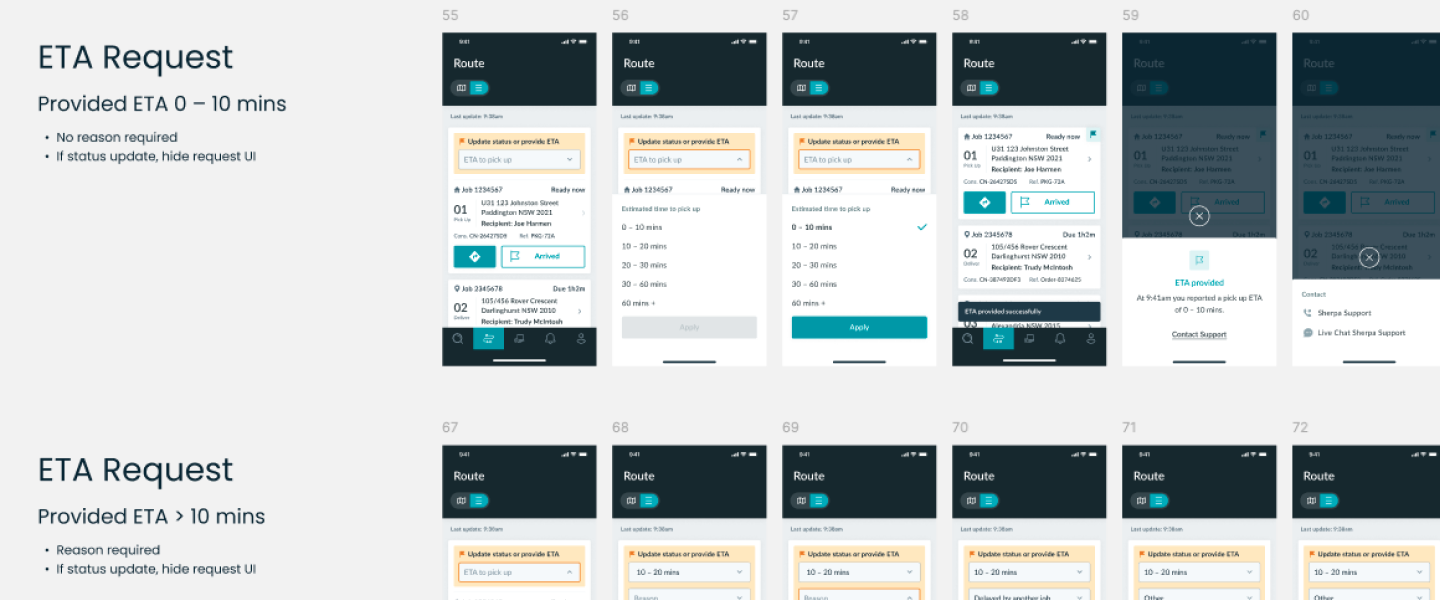
UX flow for when and how we're sending ETA requests in-app
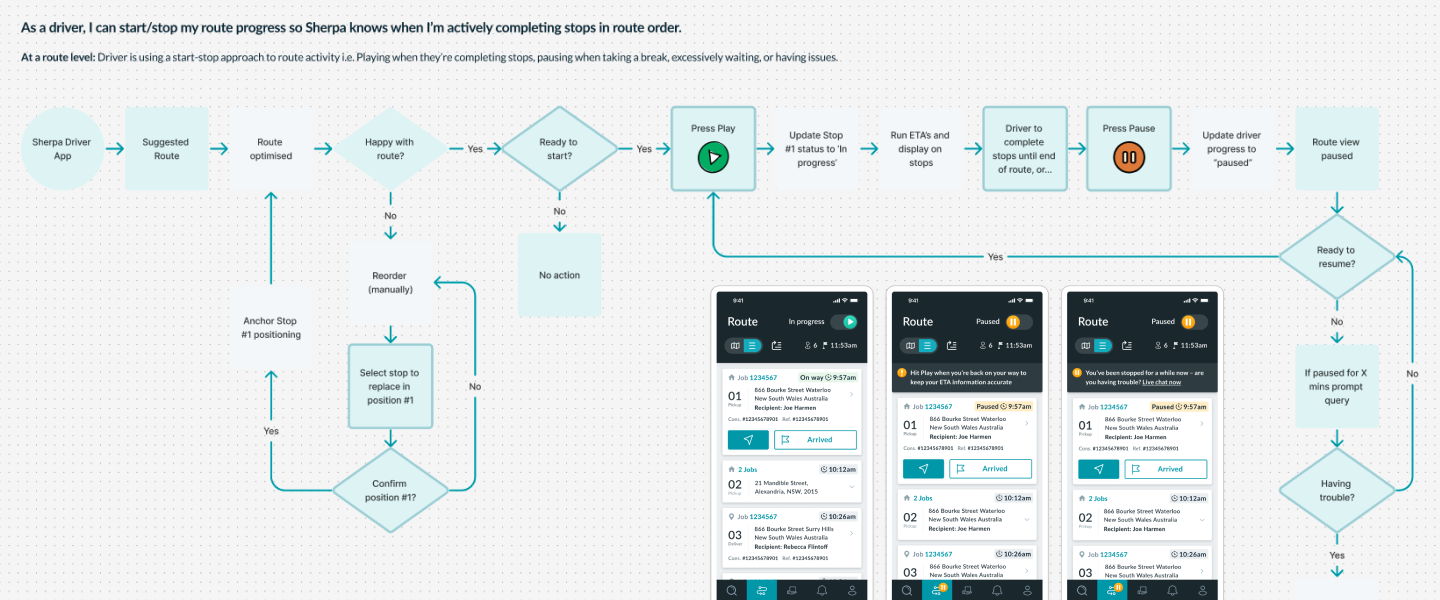
UX flow and workshopping ideas for route-level UI/UX
Figma file artboards designing instances and scenarios

Key assumptions

01

Drivers would find in-app requests too disruptive to adopt.

02

Agents needed to manually decide when to chase a driver.

Key outcomes

70% reduction in ETA-related SMS volume within six weeks.

78% of requests got a reply or delivery update within 10 mins.

Agents reported greater confidence in delivery visibility.

Design process

Mapped where the feature intersected with the existing delivery flow — to reconfigure current driver actions rather than add new ones.

Explored job-level and route-level approaches. Prototyped both with drivers and internal teams to understand real-world constraints and comfort.

Landed on two connected features: ETA request and On My Way. Designed to feel like a natural part of the existing workflow, not an extra action.

Built a Looker report pre-launch to track response rates, ETA accuracy, and message volume. Follow-up survey to guage sentiment and any frustrations.

"Kate's design work is elegant, professional, and he UX is so well planned out. I love that I can scribble on a whiteboard and she can bring my vision to life."

Headshot of Ryan, Founder at Refilled

Ryan

Founder of Refilled

"Working with Kate was genuinely enriching from a product perspective. She's a strong, thoughtful collaborator who communicates her ideas clearly and isn't afraid to challenge assumptions in the room when it leads to better outcomes.
Headshot of Maliha, Lead Product Manager at Sherpa

Maliha

Lead Product Manager at Sherpa

Frequently asked questions

How I work

How do you approach a new product or problem?
How do you think about AI and design?
How do you handle disagreements within the team?
What does your design process look like day to day?
What kind of team or environment fo you best work in?
Are you open to full-time or contract roles?

Let's chat

Based in Sydney, Australia • Open to remote or hybrid • Fractional or full-time.